Execution pressure doesn’t reveal employee weakness; it exposes flaws in leadership design.
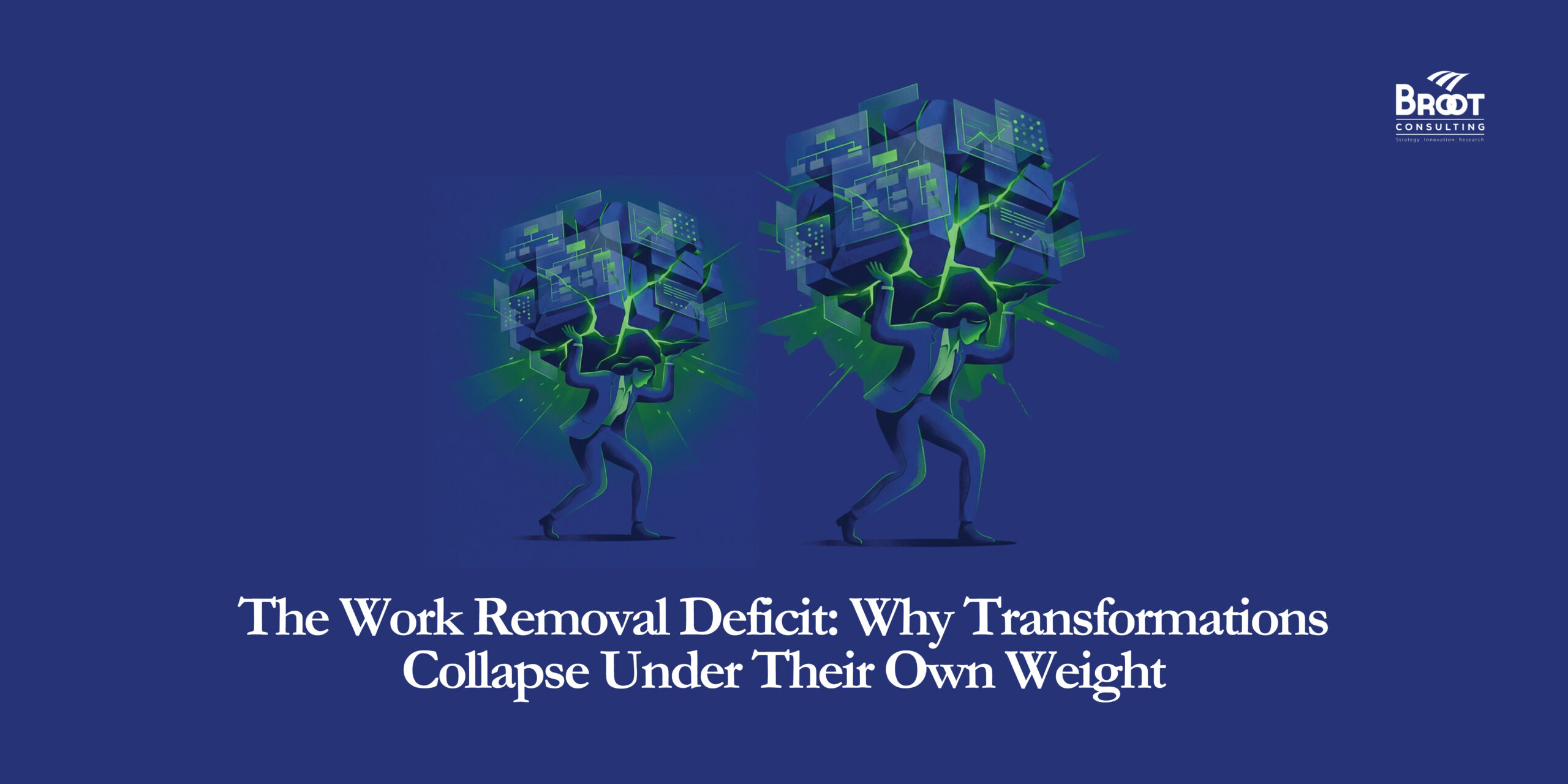
Transformation is often framed as ambition in motion, but it quickly becomes a test of whether strategy can withstand operational reality. Many initiatives fail before execution begins—not because the vision is flawed, but because leaders introduce new priorities without retiring existing ones. This creates what can be called a “Work-Removal Deficit”: the gap between the work launched and the work deliberately stopped. As that gap widens, transformation shifts from a path to outcomes into a source of stress.
Consider Ralia, an operations manager energized by her company’s bold 2026 agenda. The strategy promised sharper execution, stronger customer focus, and better data discipline. Yet within weeks, her workload had expanded. Some tasks aligned with the new priorities; many did not. A colleague’s resignation quietly redistributed additional responsibilities. What unsettled her most was not just volume, but ambiguity—no sequencing, no clear definition of success, no clarity on trade-offs when priorities collided. Leadership saw momentum. Ralia felt overwhelmed.
This is where most transformations fracture—not in strategy decks, but in the operating system. Organisations rarely fail for lack of vision; they fail because their systems cannot absorb added pressure. When clarity is missing, capacity misjudged, cadence inconsistent, and culture unsupportive, execution falters. Employees do not resist change by default. They struggle when expectations rise without decisions, support, and simplification to match.
The core lesson is direct: transformation becomes sustainable only when leaders remove weight as deliberately as they assign it.