
Executive Insight: Why This Matters Now
AI is accelerating digital transformation — but trust is lagging behind.
In PwC’s 2024 CEO Survey, 86 % of CEOs said AI is central to their digital strategy, yet only 35 % have an ethical-oversight framework. Deloitte found that 62 % of firms using AI can’t fully explain how key algorithmic decisions are made.
This gap isn’t just a compliance issue; it’s a transformation crisis. When AI systems misclassify, exclude, or act as black boxes, they corrode the pillars of trust and operational integrity.
This article reframes digital transformation through the lens of ethical design and introduces a practical model, the AI Ethics Triangle, to help organisations balance performance, transparency, and fairness. Because the 1 % left behind aren’t statistical noise; they’re the litmus test of responsible innovation.
==========================================================
Redefining Digital Transformation
Digital transformation is more than a buzzword. It’s the quiet restructuring of how organisations work, how customers are served, and how value is created. In simple terms, it means doing things better, not just digitising existing processes but reimagining them around people, data, and purpose.
At its core, digital transformation sits on five interdependent pillars: integration, customer focus, cultural change, operational improvement, and business model innovation. For years, this shift has been unfolding gradually, moving organisations from paperwork to platforms, from intuition to analytics. But with the rise of artificial intelligence (AI), the game has changed.
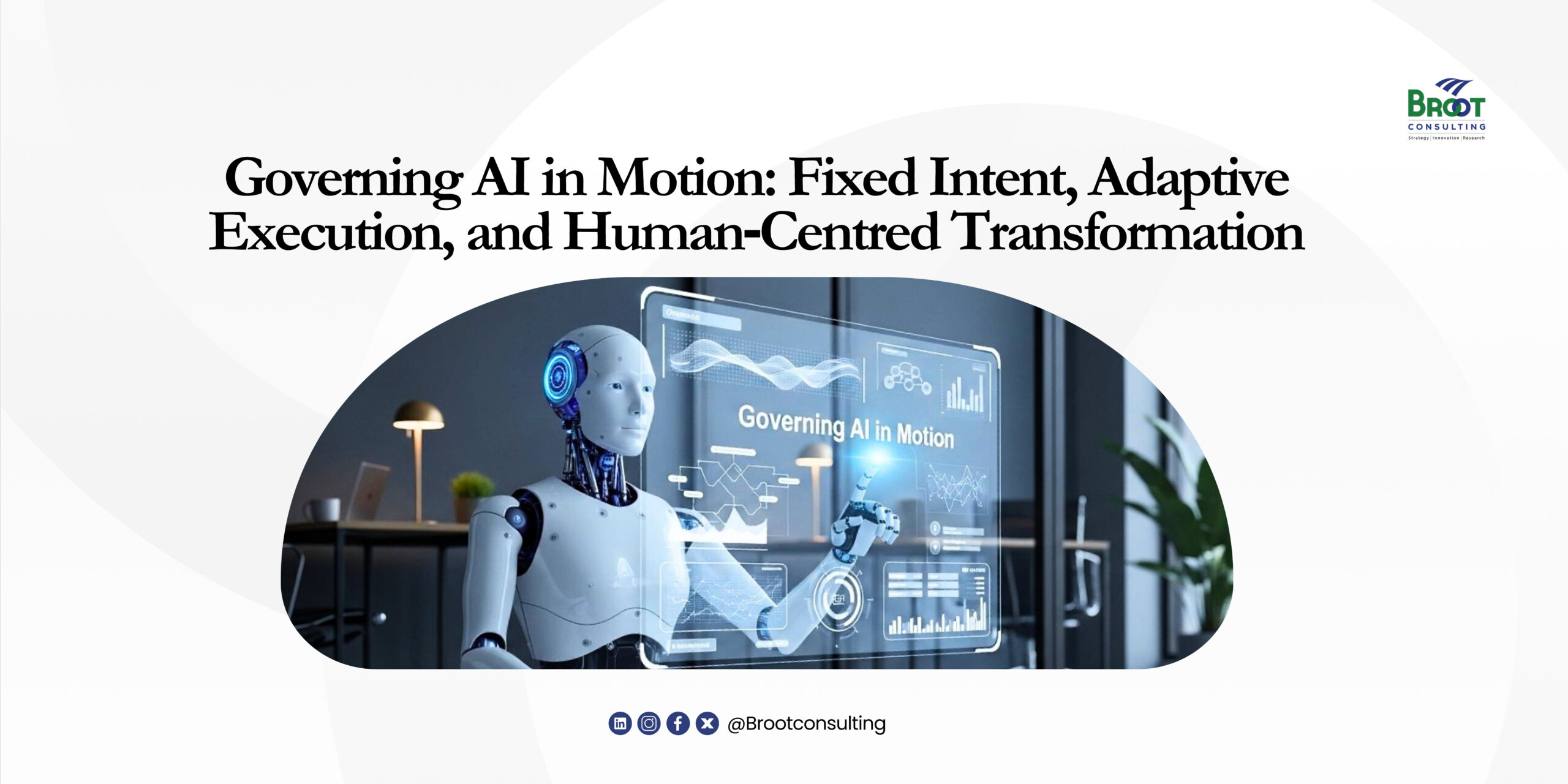
AI has become the new engine of transformation. It predicts customer needs, personalises experiences, automates decision-making, and powers new business models. Yet beneath this excitement lies a quiet dilemma. When AI systems embedded in daily operations are opaque, biased, or unexplainable, one of the main pillars of transformation, “trust,” begins to crumble. A transformation that loses trust loses its meaning.
The Promise and the Problem
AI strengthens every layer of digital transformation:
- Digitisation:converts paper into data — reading and classifying information instantly.
- Optimisation:makes operations predictive, not reactive.
- Customer Experience:delivers anticipation, not just response.
- Business-Model Innovation:turns data itself into value.
But the same technology that personalises a customer’s experience can also misclassify them. The same model that improves efficiency can inadvertently exclude people. When decisions are made by algorithms, no one fully understands; digital transformation becomes a black box of progress, moving fast but not always fair.
The Greater Good Dilemma
Here’s where philosophy quietly enters the boardroom. Most AI systems operate on a kind of utilitarian logic, the “greater good” principle. If the majority benefits, the minority can be absorbed as an acceptable loss.
Examples abound :
- A facial recognition system improves airport security but misidentifies certain groups more often.
- A predictive hiring algorithm increases efficiency but quietly filters out qualified women or older candidates.
- A healthcare AI helps detect disease early for thousands, but underperforms on darker skin tones because its data was incomplete.
On paper, the numbers look good. In reality, someone is left out.
Digital transformation, however, is supposed to be customer-centred. That means even the 1% who fall through the cracks matter. If transformation only benefits the majority, it’s not transformation ,it’s optimisation with a moral blind spot.
So the question for leaders isn’t “How do we embed new technologies?”
It’s “How do we build and use technologies that combine innovation with accountability, fairness, and justice?” These ethical gaps expose a deeper problem: when systems act without clarity or accountability, innovation begins to outpace governance.
Why Regulation Matters?
The need for regulation cannot be overemphasized, though often many perceive regulation as as a brake on innovation, but in truth, it’s not a brake but a guardrail that prevents innovation from self-destructing.
These systems operate through complex layers of probability and pattern recognition, making decisions that even their creators sometimes struggle to interpret. And when an outcome can’t be traced or justified, a deeper question emerges: who bears responsibility for the consequences?
When algorithms make choices that affect lives, accountability shouldn’t vanish into the code. Someone must still answer for fairness, accuracy, and harm.
That’s why regulation isn’t an obstacle to innovation; but its moral architecture. It draws the line between advancement and abandonment, between systems that work for people and systems that simply work.
Large models like GPTs or deep neural networks learn from billions of data points. Their logic is probabilistic, not linear. Even their creators can’t always pinpoint why they make a specific decision. That opacity undermines accountability.
When you can’t explain a decision, you can’t defend it, and when you can’t defend it, trust collapses.
That’s why frameworks like the EU AI Act and the UK’s principle-based AI regulation exist to keep transformation aligned with ethics. They demand that AI systems used in sensitive areas (like health, finance, and law) be transparent, explainable, and auditable.
From Governance to Guidance: The AI Ethics Triangle
To make this practical, organisations can adopt what I call the AI Ethics Triangle, a simple way to visualise and balance competing priorities in AI-driven transformation.
At its three corners are:
- Performance (Utility):Accuracy, reliability, and relevance: the drive to make systems smarter and faster.
- Transparency (Explainability):Accountability and clarity: the ability to understand and challenge an algorithm’s decisions.
- Justice (Fairness):Equity, inclusion, and redress: making sure systems serve all groups fairly.
At the centre of the triangle sits Trust, the equilibrium point between innovation, clarity, and fairness.
| If you optimise for… | You risk undermining… |
| Performance | Transparency and fairness |
| Transparency | Accuracy and speed |
| Fairness | Simplicity and efficiency |
The goal isn’t perfection, it’s balance with accountability. Leaders must make these trade-offs visible and deliberate rather than letting them hide inside algorithms.
When performance, transparency, and justice are balanced even imperfectly, organisations build something far more sustainable than efficiency: they build trust.
Embedding Ethics into Transformation
Building responsible AI isn’t just about compliance. It’s about culture.
Here’s how forward-looking organisations are doing it:
- Clear Roles and Ownership: Every model has a named owner, every dataset a steward, and every decision a review trail.
- Ethical Design from the Start: Ethics isn’t a post-launch audit; it begins at the design table.
- Diverse Teams, Fewer Blind Spots– Interdisciplinary teams (law, data science, sociology, design) reduce the risks of narrow thinking.
- Explainable Tools– Using frameworks like LIME and SHAP to make AI decisions interpretable for non-technical users.
- Continuous Monitoring– Models must evolve responsibly as data and contexts change.
Digital transformation at its best is a living system, sensing, learning, and adapting. Governance simply keeps it human.
Call to Rebalance
AI has shifted digital transformation from automation to augmentation, from doing things faster to thinking differently. But transformation without ethics isn’t transformation; it’s just acceleration.
So as leaders and innovators, the task ahead isn’t just to build intelligent systems. It’s building accountable, fair, and transparent systems that earn the trust of the people they serve.
Because the essence of digital transformation isn’t technology. It’s trust, inclusion, and human dignity at scale.